
When to Choose a Sweet Reaction Instead of a Sarcastic One
Decide when to send a sweet reaction meme and when sarcasm fits, so your reply feels clear, welcome and genuinely funny.
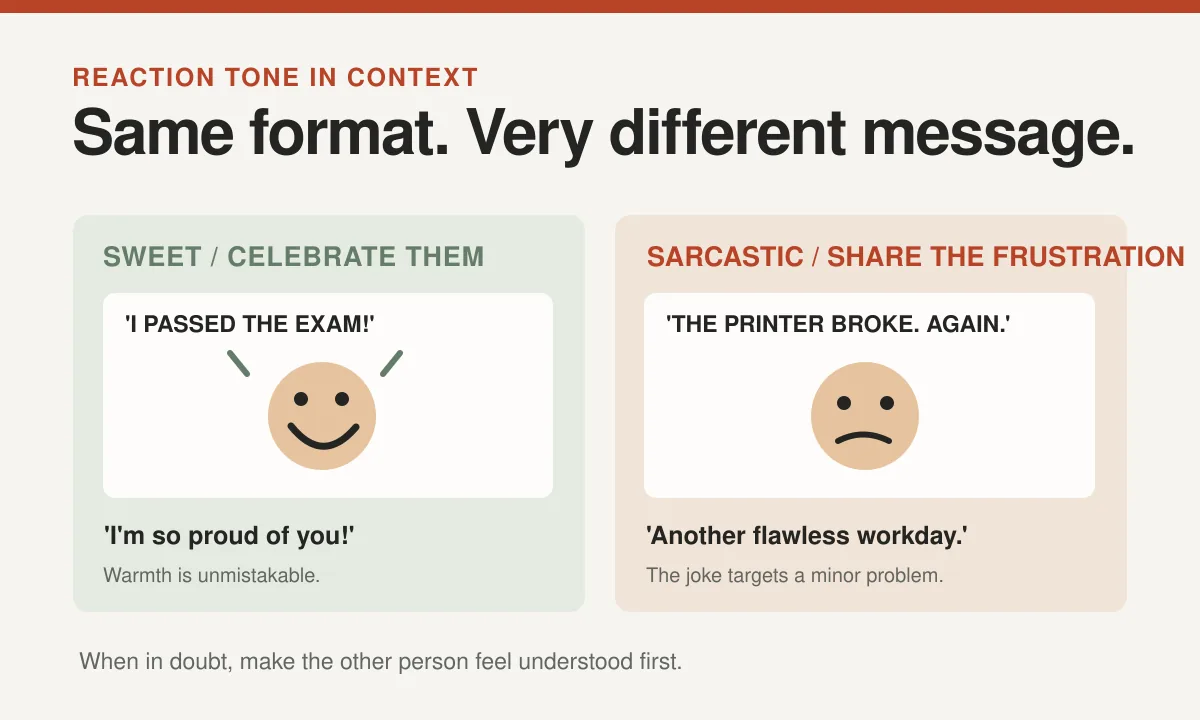
Your friend announces that they finally passed a difficult exam. You have two pictures saved: a cartoon character looking unimpressed and a tiny dog wearing a celebratory hat. One of them is about to make the conversation significantly better. The other may raise questions about the future of your friendship.
Choosing between a sweet reaction and a sarcastic one depends on the person's mood, your relationship and what the message means to them. A reaction image is a short reply, but it can carry a surprisingly large emotional tone.
Start with what the person is telling you
Some messages are easy to categorize. Somebody got a new job. Somebody finished a project they have worried about for weeks. Somebody is trying to explain a bad day. Those moments generally deserve an encouraging or sympathetic response.
A genuinely happy expression is a good starting point. It shows that you recognize the importance of the news without turning the exchange into a stand-up routine.
Our wholesome love memes offer affectionate pictures for these moments. Pairing one with a sentence such as "I'm really proud of you" can make your meaning unmistakable.
Sarcasm may be more suitable when the subject is already joking. If your friend proudly reports that they have eaten an entire family-size bag of chips during a movie, a dramatic expression of disbelief might be welcome.
The difference lies in the context, not the inherent sweetness of the animal pictured.
Sarcasm needs a shared understanding
Sarcasm often asks the reader to interpret the opposite of the literal message. "Wonderful decision," paired with a skeptical expression, might mean you think the decision is questionable.
Close friends can understand that tone quickly because they know how you speak. In a new friendship, the same picture may look like criticism. Text and images remove many of the cues that make teasing obvious in person.
The reaction meme collection includes faces that could mean several things depending on the caption. Check the impression the picture creates before sending it.
If you have to explain that the image is secretly affectionate, a clearer one may serve you better. Ambiguity can be part of a joke, but you don't want somebody decoding emotional Morse code after sharing good news.
Pick sweetness when the stakes feel personal
A friend who has shared a disappointment, illness or difficult family situation may need a thoughtful response more than a clever image.
You can still use a gentle meme if they enjoy that kind of support. A small, warm picture can be a way of saying that you are thinking of them. Avoid anything that minimizes the difficulty or implies they should cheer up immediately.
Ask whether they want company, advice or a distraction when you are unsure. People differ in how they use humor during stressful moments, and the best response follows their preferences.
If the message calls for practical help, offer it. A smiling cartoon duck cannot collect somebody's prescription or drive them home, no matter how enthusiastically it appears to volunteer.
Use sarcasm for a problem everyone already finds funny
A sarcastic reaction can be delightful when both people recognize the absurdity of a minor situation. Your friend describes a printer requesting an unknown color of ink. You reply with an expression of theatrical admiration for the printer's unreasonable standards.
The joke works because the target is a harmless frustration rather than the person sharing it.
This is especially useful for relatable everyday memes. The humor comes from shared experience, and the reaction offers solidarity without requiring an elaborate speech.
Keep an eye on intensity. A small eye roll suggests mild disbelief. A character screaming angrily may make a simple story feel hostile. The stronger reaction may be amusing among close friends, but only when the intended exaggeration is clear.
A mixed group changes the safest choice
In a group chat, several people may read your response without knowing your relationship with the original sender. An affectionate insult that makes sense between siblings can sound unnecessarily harsh to somebody new.
Choose the reaction that remains clear to most of the audience. A celebratory picture for good news generally travels better than a sarcastic one that needs an oral history of your friendship.
Our article on how to read the room before sharing something funny explores the small signals that tell you which tone belongs in a conversation.
Privacy matters too. Don't attach somebody's private disclosure to a meme or forward the exchange just because it makes a funny screenshot. The audience should be the people who were invited into the conversation.
| What happened | Safer starting tone | When playful sarcasm may fit |
|---|---|---|
| Someone shares a success | Warm congratulations | Only if your shared joke clearly celebrates them |
| A friend describes a hard day | Kind acknowledgment | After they invite humor |
| A printer breaks again | Shared comic frustration | When everyone already sees the absurdity |
| A mixed group sees the thread | Clear and inclusive | When the joke needs no private backstory |
Five questions that help you choose
Before sharing, ask yourself:
- Is this person celebrating, struggling or already joking?
- Would the picture feel kind if the recipient took it literally?
- Do we know each other well enough for the sarcasm to be obvious?
- Is the image's emotional intensity appropriate to the situation?
- Would a simple sentence make my response clearer?
A short pause can prevent a surprisingly long misunderstanding. If the answers point in different directions, choose a gentle reaction or use words first.
There is no prize for being the most sarcastic participant in the thread. Your friends may give out an unofficial trophy, but it will probably look like a disapproving potato.
Consider how the same picture might look the next morning, outside the original conversation. A sarcastic expression attached to a celebration can seem strange when the surrounding messages have disappeared. A warm reaction is easier to interpret when a screenshot or forwarded message has lost its context. This matters most in mixed groups where people join the thread at different times.
Follow the other person's response
A reaction image starts a small exchange. If the recipient appreciates the sweet picture and continues talking, follow their lead. If they introduce a joke, the tone can become more playful.
If they seem confused or hurt by sarcasm, clarify your intent and apologize where appropriate. Avoid explaining at great length why they should have enjoyed it. Being understood matters more than defending the technical quality of a meme.
The best choice makes the other person comfortable enough to reply naturally. Sometimes that's a ridiculous cartoon celebration. Sometimes it's a warm sentence without an image at all.
Save the sarcastic potato for the printer. The printer has been asking for it.